


When we get into the car and gently close the door, watching the scenery outside flow by, few people tend to pay attention to this transparent "guardian" - the car window. However, its story is actually a "history of evolution" about technology, design and safety.
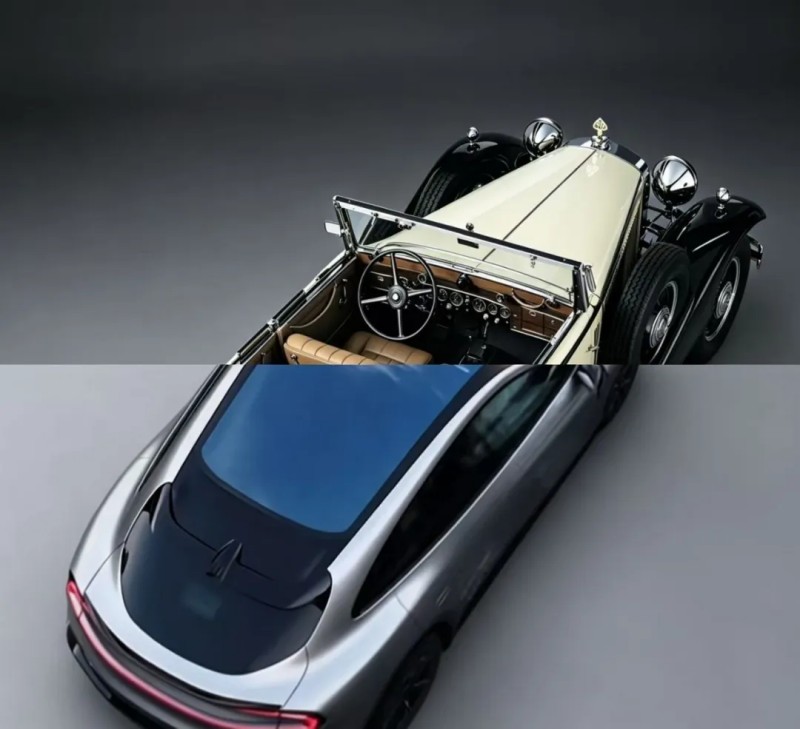
Starting point: The era of handmade glass
(1900s - 1920s)
In the early days of automobiles, glass was not very safe. The early cars used only ordinary flat glass, which was all cut and polished by hand.
Back then, the glass was so fragile that it was almost unimaginable - once a vehicle collided, the glass fragments would fly out like sharp blades, causing serious injuries to the driver.

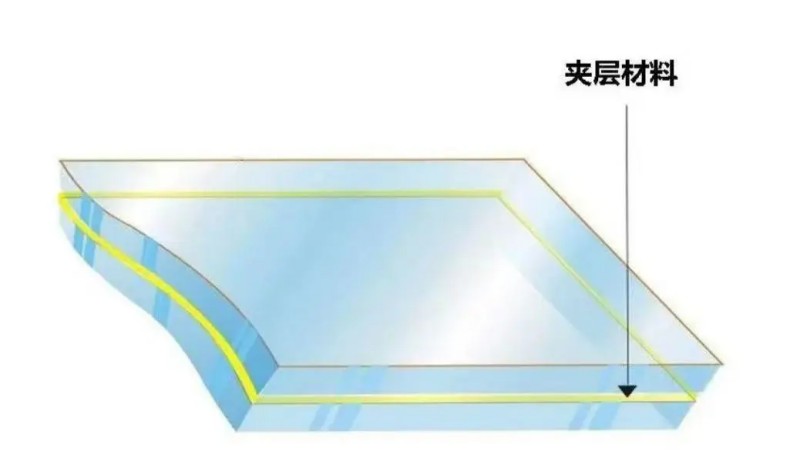
Around 1920, the Frenchman Édouard Benediktus accidentally discovered a "layered glass" technology: a transparent plastic film (initially cellulose nitrate) was sandwiched between two layers of glass. Even if it broke, it wouldn't splash. This technology was quickly applied in automobile manufacturing, becoming the prototype of safety glass.
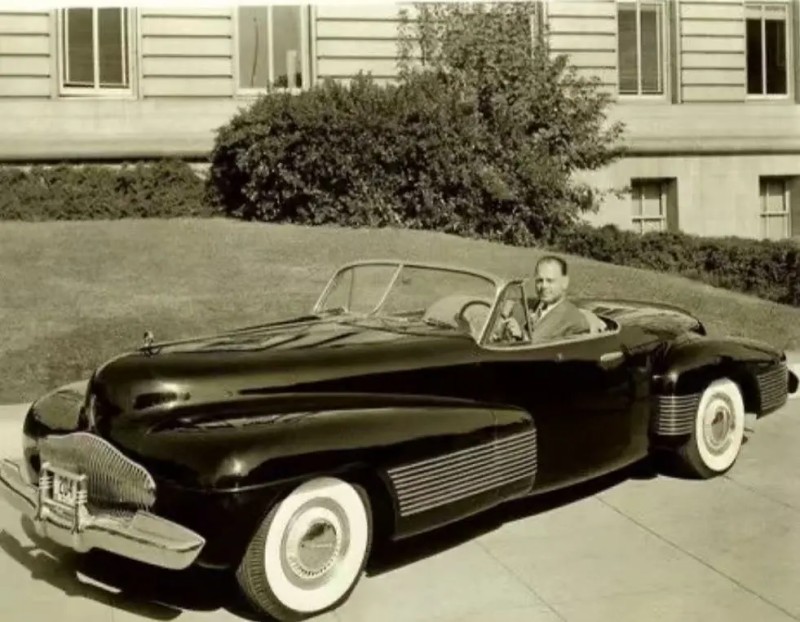
The founder of Ford Motor Company, Henry Ford, suffered a minor injury due to a piece of windshield debris. His friends had also encountered similar problems before. Ford decided to promote the use of laminated glass in cars.
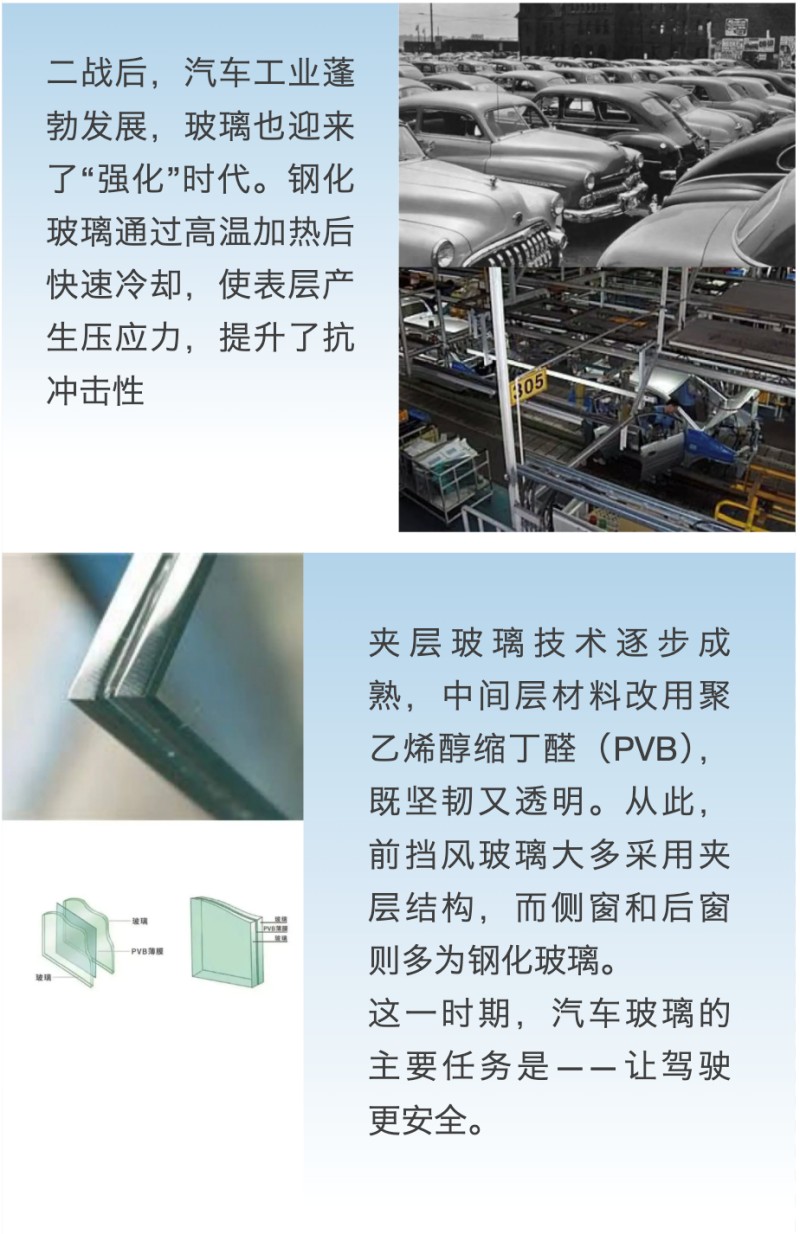
Strengthening and Laminated Layers: The Golden Age of Safety Glass
(1930s - 1970s)
Comfort and Energy Efficiency: The Rise of Insulated and Coated Glass
(1980s - 2000s)
By the 1980s, people's demands for cars went beyond just "safety" and they also desired greater "comfort".
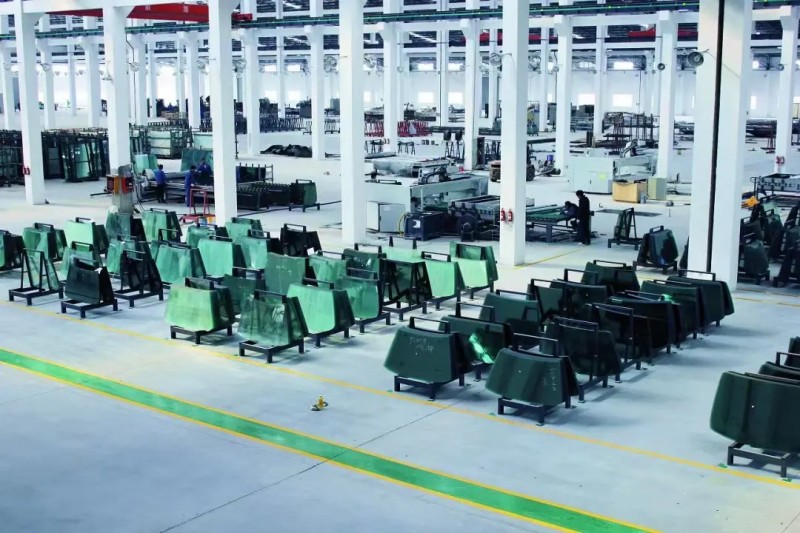
Thus, insulating glass and coated glass took the stage.
By depositing a thin film of metal oxide on the surface of the glass, it is possible to effectively reflect infrared rays and ultraviolet rays - making it cooler in summer and warmer in winter.
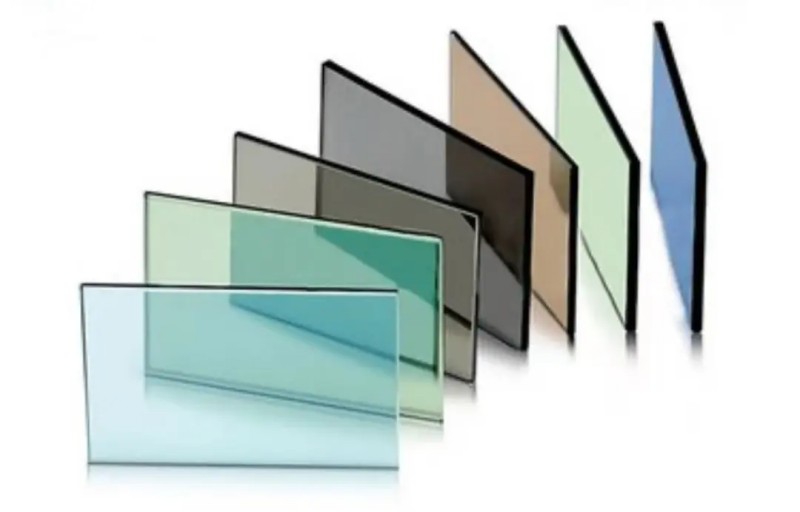
Later, there were also heat-absorbing glasses in green and blue colors, enhancing the appearance; privacy glass provided shielding for the rear seats and rear windows; heated and deicing glass enabled clear vision even in cold winter. Automotive glass has gradually evolved from a "safety component" to an integral part of "comfort and design".
The advent of the intelligent era
(2010s - Present)
Entering the 21st century, the wave of intelligent technology has swept through the automotive industry, and glass has also witnessed a qualitative leap.
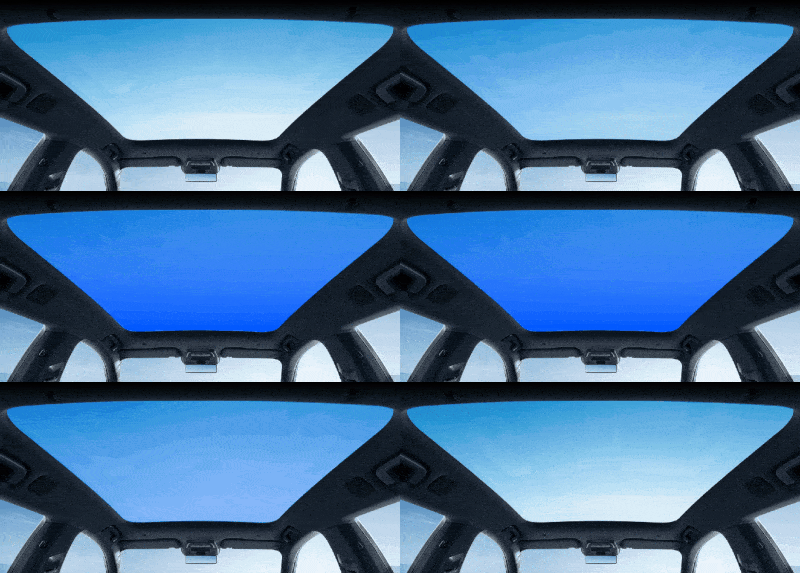
Technology Implementation: Berma Electrochromic Glass
Defining the Future Windows
If the past century was the period of "strengthening" for glass, then the future will be the era of "becoming intelligent" for it. The Berma electrochromic automotive glass, through advanced electrochromic technology, achieves the following functions: one-button dimming: freely switch from full transparency to dark shading; heat insulation and noise reduction: effectively block ultraviolet and infrared rays, allowing you to enjoy a comfortable ride; intelligent response: can be connected to the vehicle's central control system to achieve automatic light sensing adjustment; high-end texture: uniform color change, no glare reflection, combining technology and aesthetics.

Whether it's the high-speed on a hot day or the street lights at night, the Berma electrochromic glass can offer you the best view and a comfortable experience. This is not just a piece of glass; it is a brand-new way of intelligent transportation.
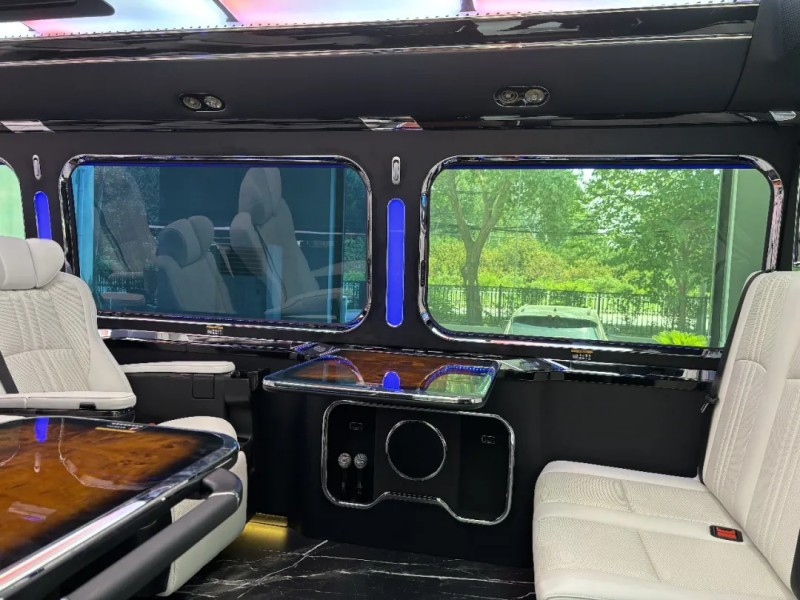
From hand-blown glass to smart dimming,
From security protection to human-computer interaction,
The evolution of car glass is a microcosm of the technological progress in the automotive industry.
Now, the Berma has made all of this come true.
Let the future cars not only be transparent, but also possess the intelligence capable of understanding light and temperature.


